Tramline Tales: typewritten essays by Sharmistha Palui on marketing, brands and communication, three times a week, from Howrah.
Every Scar Is Now a Logo
Kindly note: the most famous number in food advertising is not a number. It is a gamble.
Pick up a bottle of Heinz and find the 57. It promises fifty-seven varieties. It was never true. And it was put there by a man who, some twenty years earlier, had gone bankrupt. That is the part nobody prints on the bottle. It is also the part that explains the bottle.
These days brands go hunting for their scars. The garage, the borrowed money, the first shop that shut: dug up, polished, set in a pretty font. Heinz did not need to hunt. He was carrying his.
The Bankruptcy Before the Bottle
Issued in public interest: the man whose name is on your ketchup once could not pay his bills.
Henry John Heinz started small in 1869, in Sharpsburg, Pennsylvania, bottling horseradish. Sauerkraut, vinegar and pickles followed. So did trouble. By 1875 the business was bankrupt.
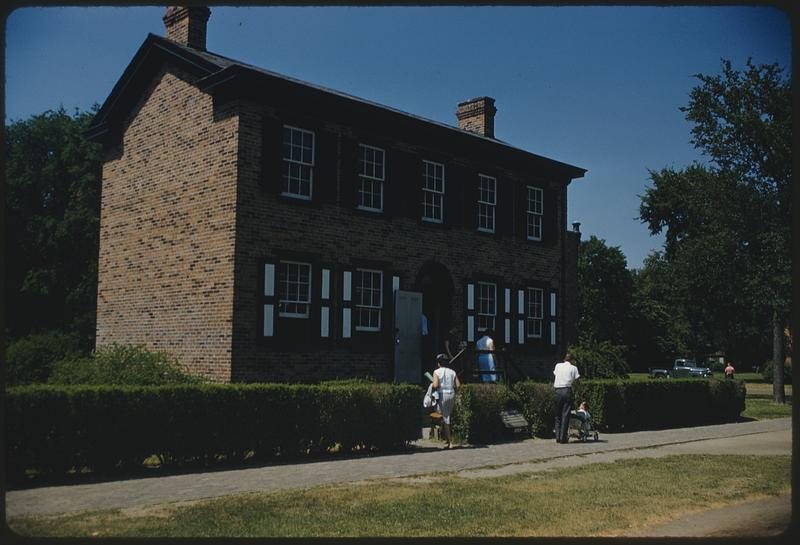
Where it all began
Most of us, at that point, would have taken the hint and a salaried job. Heinz took a year. In 1876 he was back with a new firm, set up with his brother and a cousin. By 1888 he had bought them both out and put his own name on the door: the H. J. Heinz Company.
Read that again in cricket terms. Out for a duck in 1875. Back at the crease in 1876. Captain by 1888. Nobody prints that first innings on a label. And yet it is the innings that taught him everything that came after: what to bottle, whom to trust, and what a name is worth once it has been worth nothing.
57, Kindly Note, Was a Lucky Guess
Now for the part I love.
In 1896, Heinz came up with the line that still sits on his bottles: 57 Varieties. Why fifty-seven, you ask? Excellent question. By then the company was already selling more than 60 products. The number was not a count. Five was his lucky number. Seven was his wife's.
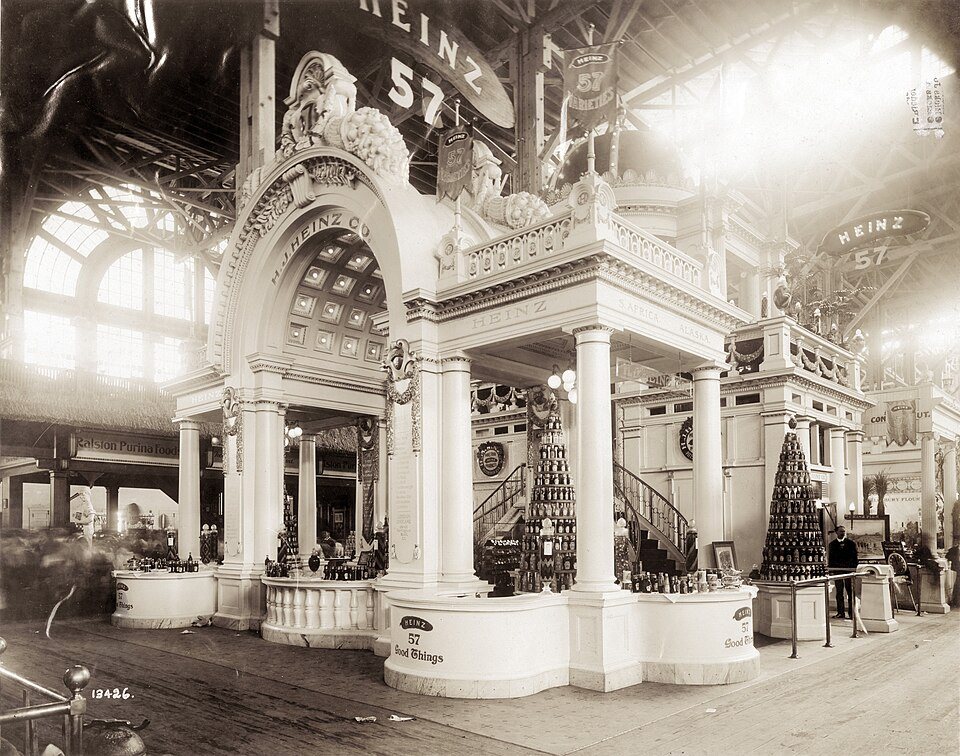
57 on every banner, c. 1900s
Let us defend this, as any responsible marketer must. Clearly 57 was a conservative estimate, issued in a spirit of modesty. Clearly the other products were simply shy... Who could have guessed that the most famous number in food advertising would turn out to be a pair of lucky charms? Only everyone who has ever met a marketer.
But do not mistake it for a whim. It was a bet. A man who had already lost one company was now putting an unexplained number on everything he sold. Had it flopped, he would have been the bankrupt with the silly slogan. Instead, "over 60 products" became a promise with a personality. Oddly specific, so it sounded true. Easy to remember. And carrying, quietly, the nerve of someone who had hit the floor and still chose to back his own luck in public. Some people leave their fate to the stars. Heinz printed his on the label.
Wrong on the arithmetic: right on the advertising. Take a bow, Mr Heinz.
The Loop
We like our success stories as straight lines: struggle, breakthrough, yacht. Business does not work that way. It works like a loop that keeps running, even after the balance sheet looks handsome.
A/. You fall.
B/. You restart, carrying the lesson instead of the loss.
C/. You gamble on your conviction.
D/. You turn the scar into the story.
E/. You go round again, because the next fall is already on its way.
Heinz ran the full loop. Most brands today skip straight to D. They hire a designer to find a garage, an old sign, a founding year in a pretty serif, and print it before they have earned it. The scar is borrowed. The price is not.
Run honestly, it is a virtuous loop. Every pass leaves you with a little more experience and a little more story. The only way to break it is to cheat on the first three steps.
The Scar Audit
Some homework for Monday morning, whether you run a startup, a marketing team or the shop at the corner of your street. Score one point for every yes.
A/. Do you know your hardest year, without checking?
B/. Have you ever told a customer about it?
C/. Do you still have something from that year: the first bill book, the old signboard, the ledger with the crossed-out sums?
D/. Could it fit on your packaging, your carry bag or your WhatsApp catalogue?
Zero or one: you are selling a product. Two or three: you are selling a company. Four: kindly call your designer, and ask them to stop inventing.
The audit is a game. The point is not. Every small business already owns the thing big brands spend crores trying to recreate: a real history, with real dents in it. Most hide it, because a dent looks like weakness. It is not. A dent is proof you were there.
Heinz never hid his. He carried a bankruptcy for twenty years, then gambled on two lucky numbers and printed them as if they were gospel. They became the most confident number on any supermarket shelf.
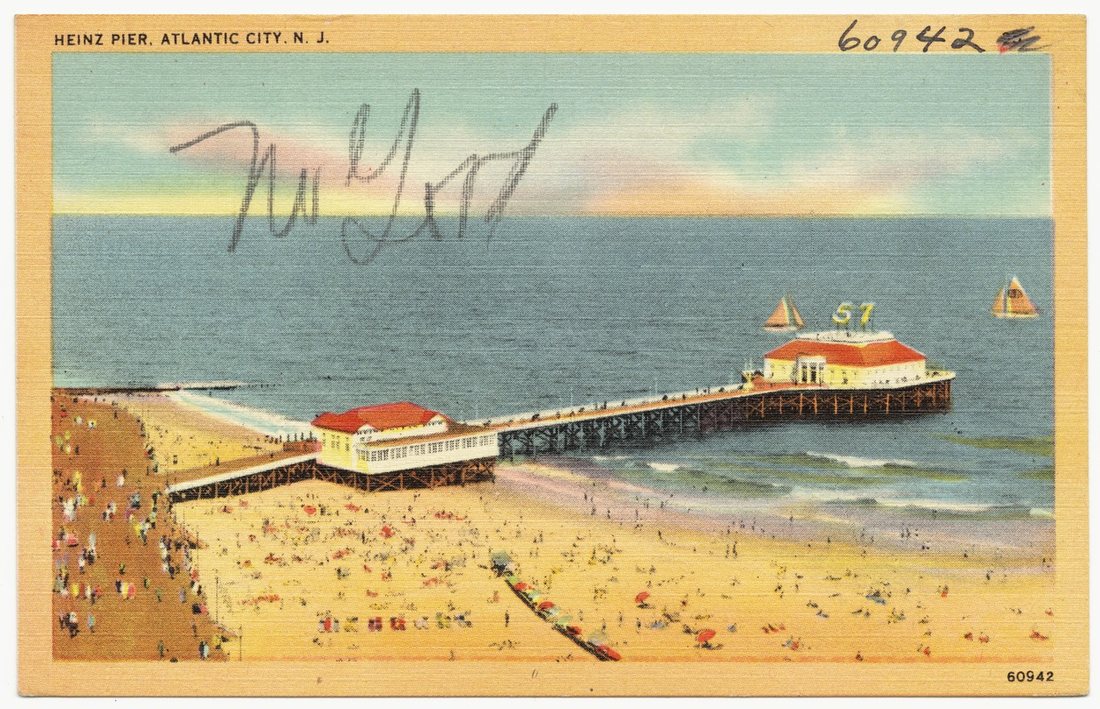
57, out at sea. Atlantic City
So keep the receipts of your bad years. The shop that shut, the launch that flopped, the season nobody bought. Do not paint over them. One day, they are the logo.
Kindly note: the slowest vehicle in Kolkata has the fastest memory.
Ask anyone in this city about the tram and they will not tell you the route number. They will tell you where they were sitting. Window side, third bench, school bag on the lap, mother's hand on the strap. Brands would sell their logos for that kind of recall.
Marketers now spend crores to look unhurried. Slow fashion, slow coffee, slow luxury, a watch that takes a year to make and a decade to explain. The tram never needed the budget. It has been unhurried since 24 February 1873, when horses pulled it from Sealdah to Armenian Ghat Street. The electric version rolled out from Esplanade on 27 March 1902, and has been taking its time ever since.
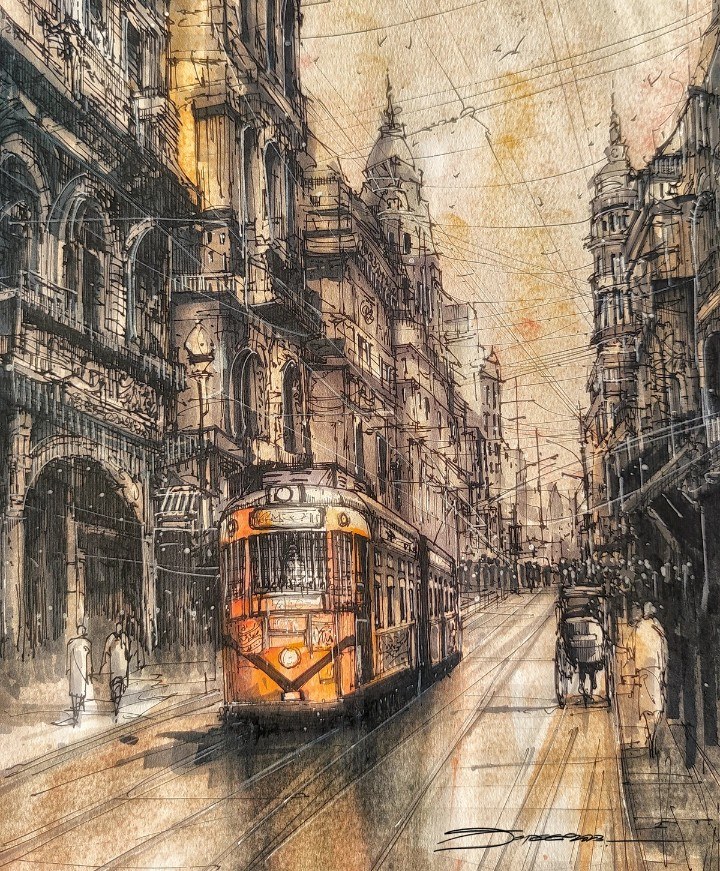
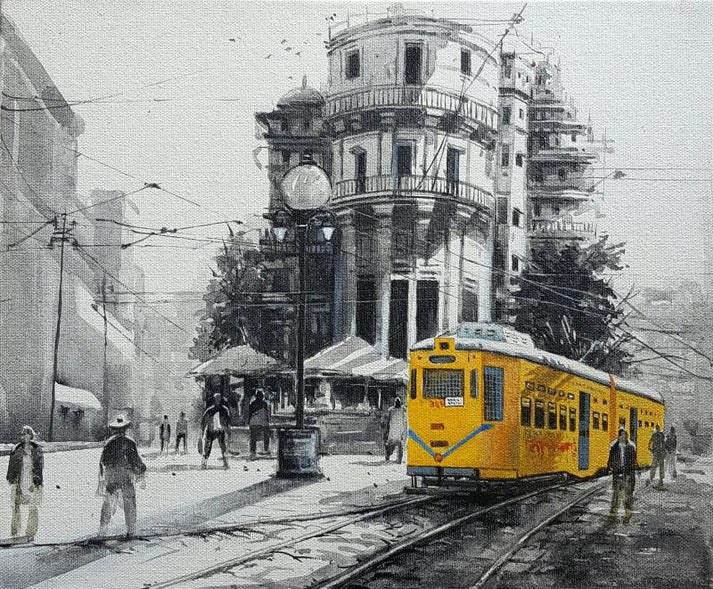
Ink, wash and a tangle of wires
Slow by Accident, Not by Design
Now let us be fair to the tram, and slightly unfair to the myth.
The tram is not slow because of strategy. It is slow because everyone else is in a hurry. Cars park on its tracks, taxis cut across its path, and a vehicle that cannot swerve has no choice but to wait. Regular riders will tell you this over a cup of tea. Nobody in a boardroom decided that the tram would be calm. Traffic decided it.
Positioning by traffic jam
And yet look at what happened. A forced slowness, repeated for a century and a half, hardened into a personality. Call it positioning by traffic jam. Most brands have to manufacture patience with a campaign. The tram was handed it for free, and had the good sense to stay the course.
The Original Third Place
Long before anyone sold us a cafe as a place that is neither home nor office, the tram was one. A bench, a window, a conductor who knew your stop. You could read, argue, sulk, plan a love letter, or do absolutely nothing, and the vehicle did not mind.
It still plays this part. In 2020 the tram added a library car, with shelves of books, magazines and free Wi-Fi, running through College Street, the city's student district, past thirty-odd institutions and the coffee houses where half of Bengal's opinions were once formed. A library on wheels that stops at a publisher's lane. If a startup pitched that, it would raise a seed round by lunch.
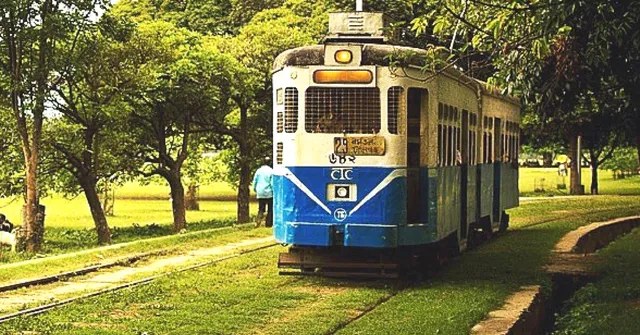
Slow lane, green light
Why the Metro Cannot Do This
The metro is a masterclass in efficiency. It removes the city from the journey. You go down at one station, come up at another, and have no memory of what lay between.
The tram does the opposite. The city arrives at the window at walking pace: the sweet shop, the balcony, the school you did not get into, the bookstall that has not changed its calendar since 1994. Thoughts have time to finish. The mind wanders at tram speed. At metro speed, it checks WhatsApp.
That wandering is the raw material of creativity, and also of nostalgia, which is just creativity pointed backwards. This is a city that replays its own history on loop. The Coffee House reunions. Puja pandals that rebuild old Calcutta in bamboo and cloth. Heritage walks, retro fonts on every cafe menu. (And yes, this very diary is typed on ruled paper in a typewriter font. Kindly note: I am part of the problem.) Nostalgia is not a hobby here. It is an industry, and the tram is its oldest factory.
The Comeback, as a Passing Shot
Now for the plot twist. In 2024, the state spoke of retiring most of the network and keeping a single heritage route. Today only two routes remain, and about twenty trams a day. Then this July, the new government announced the opposite: the tram is coming back, with air-conditioning, battery power, new routes towards Salt Lake and New Town, and a feasibility study due within thirty days.
Plans in this city arrive the way trams do, when they arrive. The more interesting question is what returns with them. A transport system, or a mood? Mood is cheaper to restore. Whatever they build, kindly leave the window open.
The Catch
Here is the part the nostalgia merchants skip. Slowness earns love. It does not earn revenue. The tram is adored and underfunded, and both statements are true on the same ride. A brand that confuses being loved with being funded does not get a royal comeback. It gets a heritage plaque.
So before you borrow the tram's patience for your next campaign, a quick audit. Score one point for each yes.
A/. Is your slowness a choice, or an accident someone else forced on you?
B/. Does it give people time to think, or only time to wait?
C/. Is there a window seat in what you sell: somewhere a customer can look out and wander?
D/. Can you afford to be slow, or only to look it?
Zero or one: you are not slow, you are late. Two or three: you have a personality. Four: kindly keep it, and stop explaining it in decks.
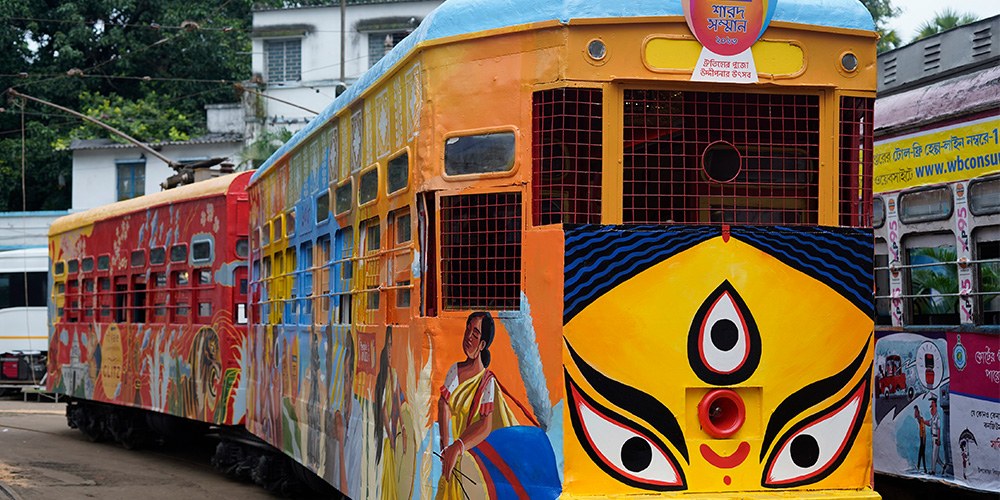
Dressed for Puja. Running late, as usual.
Fast media buys your attention. Slow media borrows your memory, and returns it with interest.
On 3 July 2000, Star Plus launched two shows on the same evening. One asked ordinary Indians general-knowledge questions for a crore of rupees. The other asked a question no quiz master would dare: could a joint family survive its own daughters-in-law, five nights a week, for eight years?
॥ "Kyunki saas bhi kabhi bahu thi." Because the mother-in-law, too, was once a daughter-in-law.
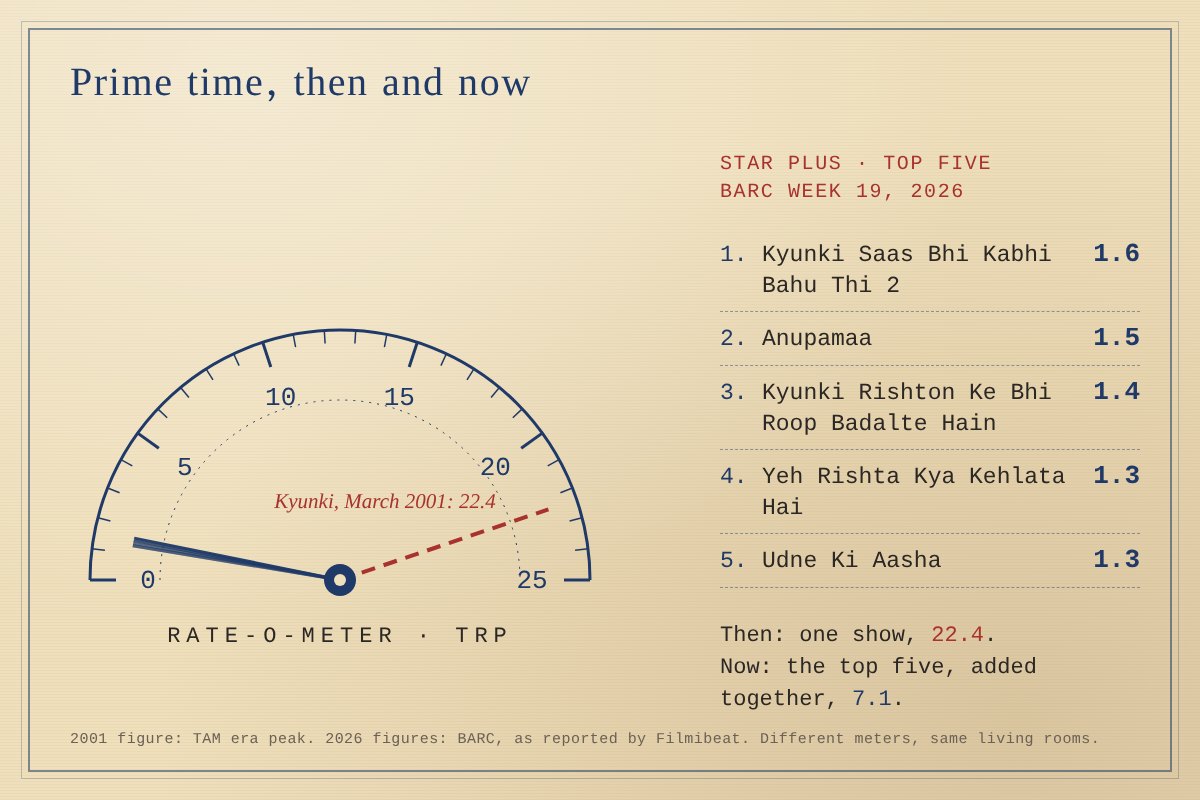
Ekta Kapoor's K-serials did something no media plan had managed before. They turned prime time into a habit, the habit into a number, and the number into a rate card. Kyunki ran for 1,833 episodes, peaked at a rating of 22.4 and sat at number one for years. Advertisers stopped buying spots and started booking a seat in the living room, somewhere between the aarti and the slap. Take a bow: Indian television has never been sold the same way since.
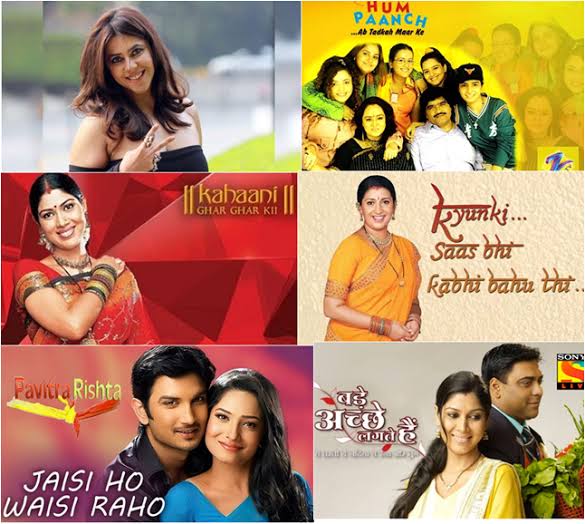
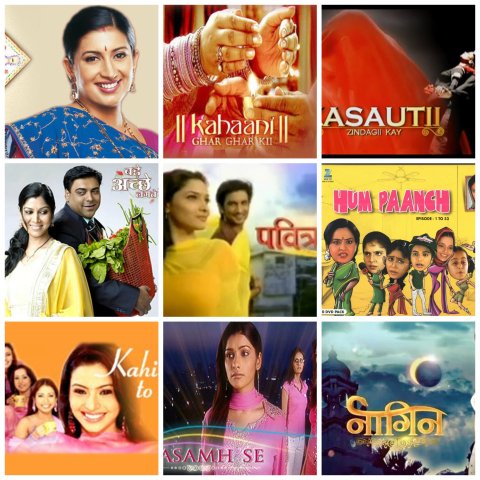
The house that Ekta built: Hum Paanch to Bade Achhe Lagte Hain
The peoplemeter became the scoreboard. And once there is a scoreboard, everyone plays for it.
When the number started writing the script
The decline was slow, and then it wasn't. Kindly note the symptoms, issued in public interest.
A/. The same slap, shown three times, from three angles, with thunder.
B/. The dead husband returns after a twenty-year leap, with a new face, because the leap tested well.
C/. A cliffhanger every Friday, so that Monday's ad break had a guaranteed audience.
And, at least once a season, the line every daily has shouted at a wedding mandap:
॥ "Yeh shaadi nahi ho sakti!" This wedding cannot happen.
None of this was bad writing. It was writing for the meter. A show was no longer asked whether it was good, only whether it was "rating". Sensationalism wasn't a creative choice: it was the business model.
K for Kyunki, Kahaani, Kasautii... and ratings
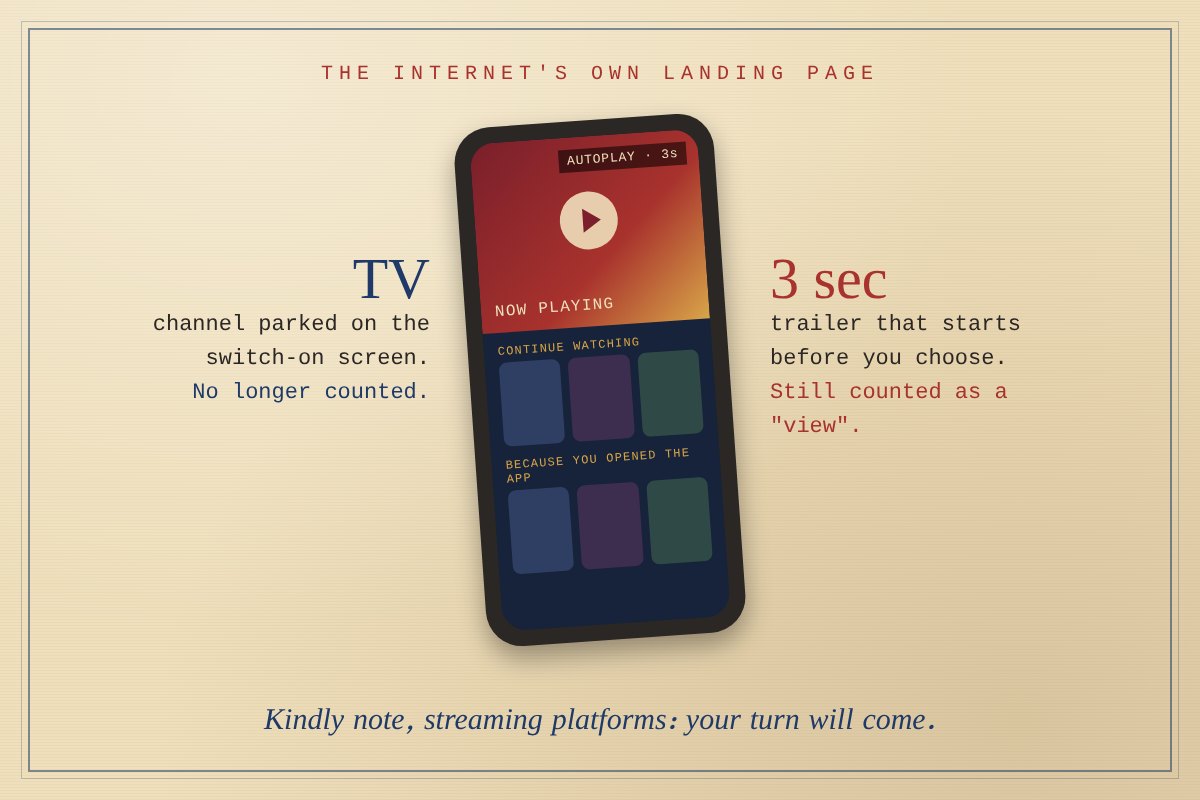
The meter could be gamed, too. In 2020 a ratings-manipulation scandal pushed news channels out of measurement for well over a year. In March 2026 the ministry's new ratings rules named an older trick. A channel parked on the screen you land on when you switch the set on was being counted as watched, simply for being there. That viewing will no longer count. Who could have guessed that the channel you never chose was not, in fact, your favourite? Only everyone who has ever held a remote.
The audience, meanwhile, had begun walking out. Many went to streaming apps and found the same disease in a new costume: seasons stretched thin, plots padded for the "next episode" button. The viewer's verdict on prime time sounded a lot like a soap's own favourite threat.
॥ "Aaj se tum mere liye mar chuke ho." From today, you are dead to me.
Buying blind
News ratings stopped in March. By early July, ratings for every genre were frozen. BARC needs a panel of 80,000 homes to qualify under the new policy; at last count it had about 70,876. So India's biggest selling season is going ahead without a scoreboard. Broadcasters are pleading for the numbers to return. Bigg Boss and KBC deals are being signed on last year's form and a firm handshake.
Which leaves the industry asking Kokilaben's immortal question, slightly rephrased.
॥ "Rasode mein kaun tha?" Who was in the kitchen? Or, this festive season: who was in front of the TV?
Nobody can say for sure. The trade calls it flying blind. I'd call it an honesty test. Strip away the weekly number and you find what was holding up most deals all along: last year's habit, a broadcaster's word, a franchise everyone has heard of. The rating never replaced gut feeling. Mostly, it reassured it.
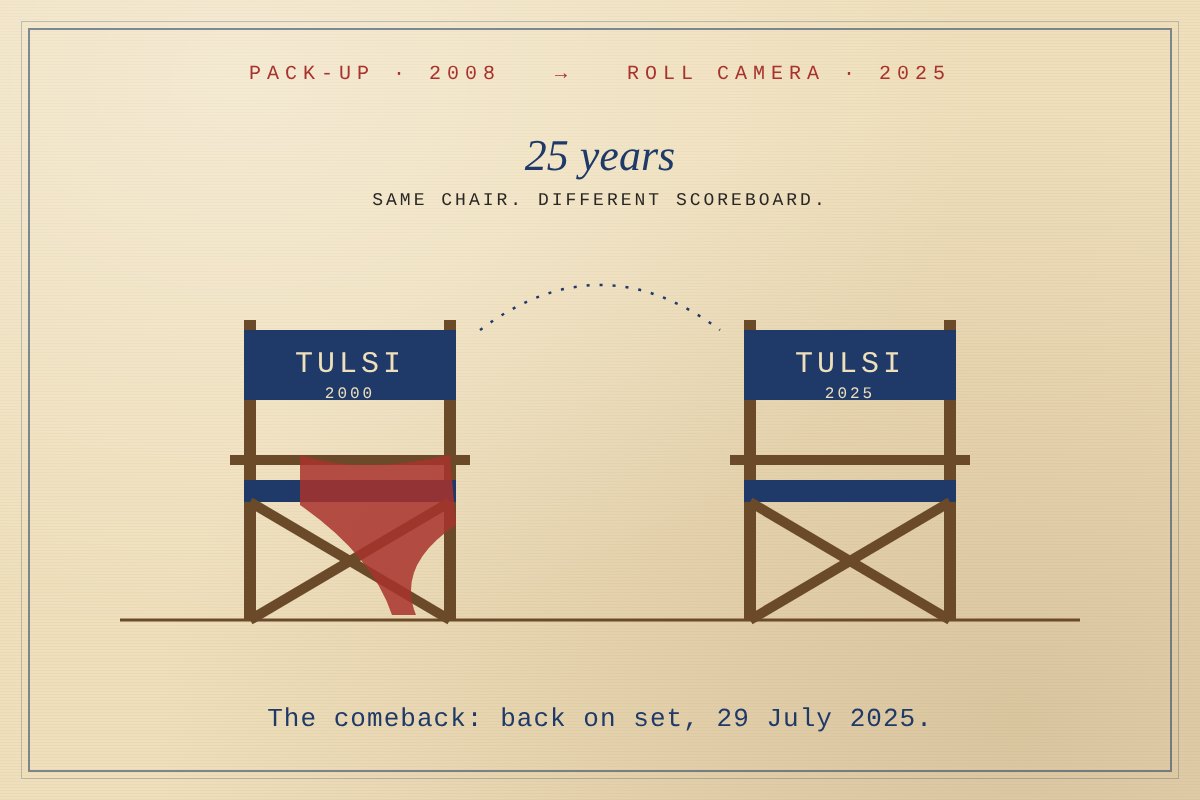
Even the great comeback proves the point. Kyunki returned in July 2025 with its original Tulsi back on set, and by May this year it was still number one on Star Plus. Its rating: 1.6. The original had peaked at 22.4.
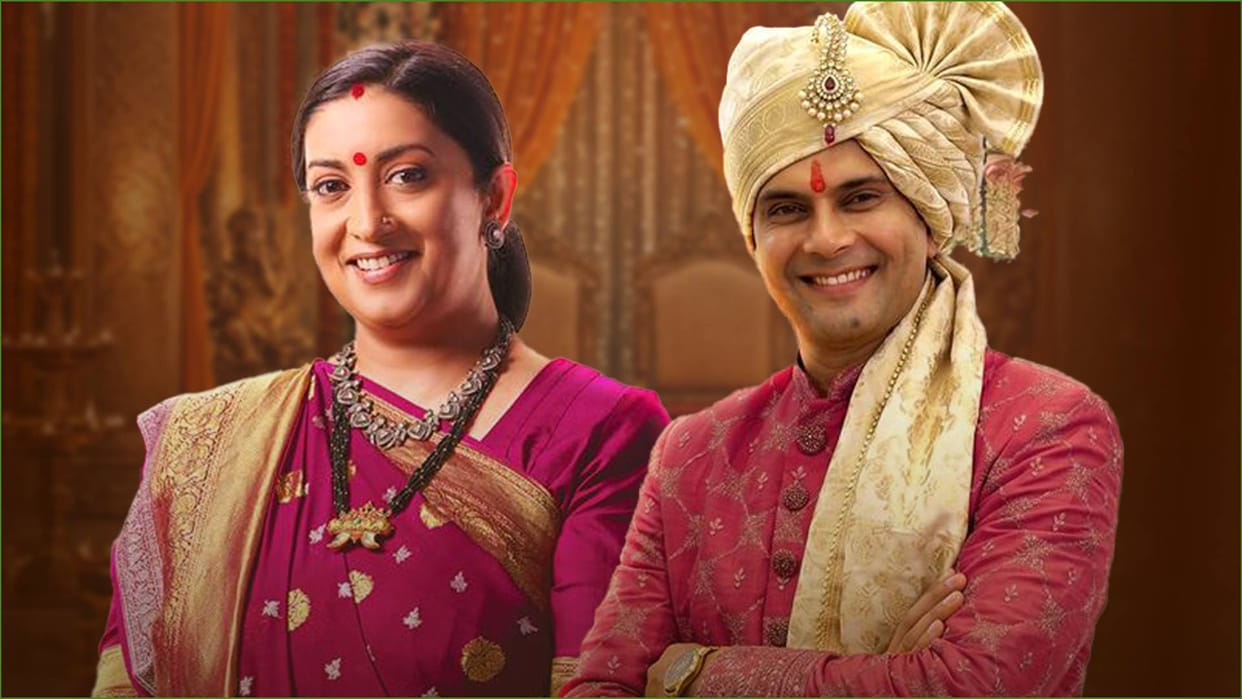
Tulsi and Mihir, 25 years onThen one show, now five together
And the stadium is shrinking while the lights are off. Linear TV revenue fell 9.2% in 2025, its fourth straight year of decline. Pay-TV homes dropped by about 11 million in a single year. Connected-TV advertising grew 42%, and digital now takes 63% of India's ad spend.
॥ "Hey Maa, Mataji!" Jethalal's cry of despair, now available as a quarterly results summary.
If the TRP never comes back
Here is the question worth asking. Suppose the scoreboard stays dark, or returns so late and so changed that nobody trusts it. How does a channel still get paid? Five models are already sitting in plain sight.
A/. Pay for the property, not the slot. Hum Log, in 1984, was India's first sponsored serial, decades before anyone measured anything weekly. Title sponsorship, "presented by", the product written into the plot: a brand buys a show's world rather than its thirty-second gaps. The future may look a lot like the Doordarshan past.
B/. Pay for outcomes. A QR code on a Bigg Boss task, a festive offer that sells out overnight. A brand trusts the number in its own sales report more than any rating. Expect deals priced on results, with the channel taking a share of the till.
C/. Sell the afterlife. JioStar says five hours of reality TV produce around twenty hours of creator clips. In 2020 a rap remix of Kokilaben's kitchen scene went viral on YouTube, and within weeks the makers confirmed a second season of the show. The clip did what no rating could: it brought a show back from the dead. Licensing and selling ads around that afterlife may soon be worth more than the original slot.
D/. Measure it like digital. Connected TVs and set-top boxes already know what is on screen. Broadcasters are asking for regulation rewritten for the CTV era. Audited, guaranteed impressions sold the way a streaming app sells them would turn a rating into a receipt.
E/. Let the fan pay. Early episodes on the app, ad-free tiers, memberships for the faithful. When advertisers hesitate, the viewer becomes the customer again.
None of these needs a TRP. Every one of them needs a show people actually care about.
So why will anyone wishlist your show?
Here is the uncomfortable bit for digital media. The autoplay trailer that starts the moment you open an app is the internet's own landing page. A three-second "view" is its own inflated TRP. The ministry has just shown what happens when a number stops meaning anything. Kindly note, streaming platforms: your turn will come.
Three seconds, one view
So the brand will come to your office, and the viewer will save your show to her list, for one old-fashioned reason. Not because an algorithm parked it on her home screen. Because it was worth her evening, and she told someone about it the next morning.
A survival strategy for Monday morning, then, for anyone who plans media or makes content. Stop asking how many people watched. Ask three better questions. Did they come back? Did they talk? Did they buy? A show that scores on even one will survive any blackout. A show that scores on none was only ever surviving on the scoreboard.
Television's golden era was never built on ratings. It was built on stories people rearranged their dinner around; the ratings simply followed. The scoreboard is dark for now. Good teams keep batting... and the crowd always knows who is playing the game and who is playing to the camera.