Open this entry in Tramline Tales
The Road Less Accelerated
· Sharmistha Palui
Kindly note: the slowest vehicle in Kolkata has the fastest memory.
Ask anyone in this city about the tram and they will not tell you the route number. They will tell you where they were sitting. Window side, third bench, school bag on the lap, mother's hand on the strap. Brands would sell their logos for that kind of recall.
Marketers now spend crores to look unhurried. Slow fashion, slow coffee, slow luxury, a watch that takes a year to make and a decade to explain. The tram never needed the budget. It has been unhurried since 24 February 1873, when horses pulled it from Sealdah to Armenian Ghat Street. The electric version rolled out from Esplanade on 27 March 1902, and has been taking its time ever since.
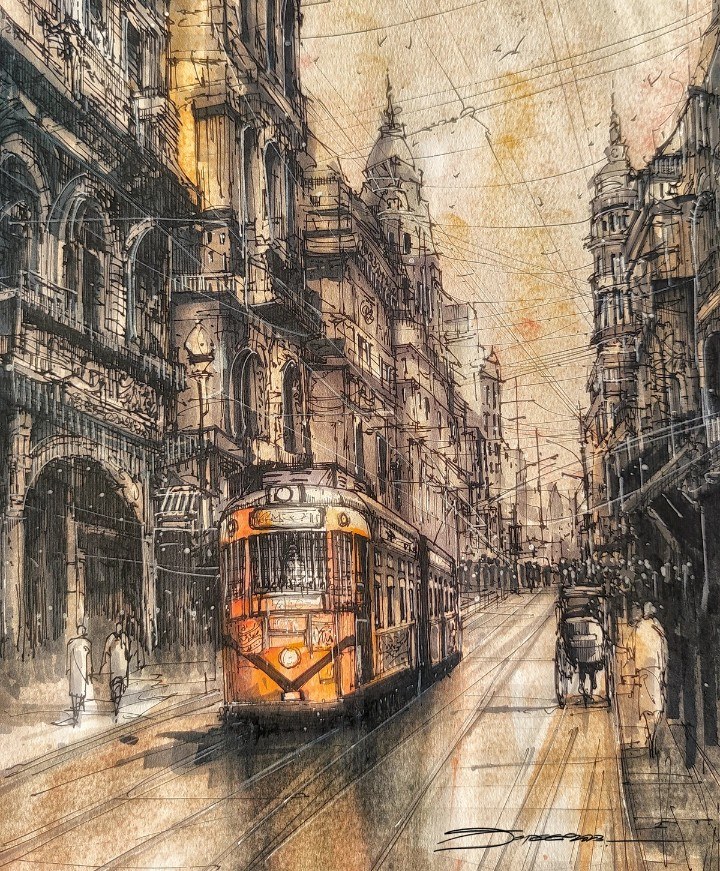
Slow by Accident, Not by Design
Now let us be fair to the tram, and slightly unfair to the myth.
The tram is not slow because of strategy. It is slow because everyone else is in a hurry. Cars park on its tracks, taxis cut across its path, and a vehicle that cannot swerve has no choice but to wait. Regular riders will tell you this over a cup of tea. Nobody in a boardroom decided that the tram would be calm. Traffic decided it.
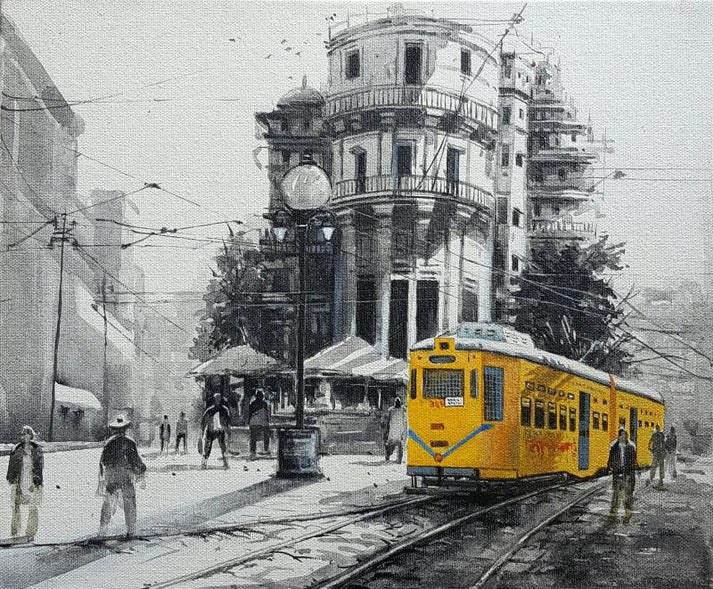
And yet look at what happened. A forced slowness, repeated for a century and a half, hardened into a personality. Call it positioning by traffic jam. Most brands have to manufacture patience with a campaign. The tram was handed it for free, and had the good sense to stay the course.
The Original Third Place
Long before anyone sold us a cafe as a place that is neither home nor office, the tram was one. A bench, a window, a conductor who knew your stop. You could read, argue, sulk, plan a love letter, or do absolutely nothing, and the vehicle did not mind.
It still plays this part. In 2020 the tram added a library car, with shelves of books, magazines and free Wi-Fi, running through College Street, the city's student district, past thirty-odd institutions and the coffee houses where half of Bengal's opinions were once formed. A library on wheels that stops at a publisher's lane. If a startup pitched that, it would raise a seed round by lunch.
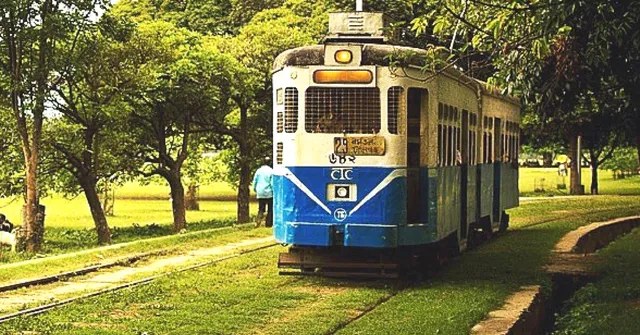
Why the Metro Cannot Do This
The metro is a masterclass in efficiency. It removes the city from the journey. You go down at one station, come up at another, and have no memory of what lay between.
The tram does the opposite. The city arrives at the window at walking pace: the sweet shop, the balcony, the school you did not get into, the bookstall that has not changed its calendar since 1994. Thoughts have time to finish. The mind wanders at tram speed. At metro speed, it checks WhatsApp.
That wandering is the raw material of creativity, and also of nostalgia, which is just creativity pointed backwards. This is a city that replays its own history on loop. The Coffee House reunions. Puja pandals that rebuild old Calcutta in bamboo and cloth. Heritage walks, retro fonts on every cafe menu. (And yes, this very diary is typed on ruled paper in a typewriter font. Kindly note: I am part of the problem.) Nostalgia is not a hobby here. It is an industry, and the tram is its oldest factory.
The Comeback, as a Passing Shot
Now for the plot twist. In 2024, the state spoke of retiring most of the network and keeping a single heritage route. Today only two routes remain, and about twenty trams a day. Then this July, the new government announced the opposite: the tram is coming back, with air-conditioning, battery power, new routes towards Salt Lake and New Town, and a feasibility study due within thirty days.
Plans in this city arrive the way trams do, when they arrive. The more interesting question is what returns with them. A transport system, or a mood? Mood is cheaper to restore. Whatever they build, kindly leave the window open.
The Catch
Here is the part the nostalgia merchants skip. Slowness earns love. It does not earn revenue. The tram is adored and underfunded, and both statements are true on the same ride. A brand that confuses being loved with being funded does not get a royal comeback. It gets a heritage plaque.
So before you borrow the tram's patience for your next campaign, a quick audit. Score one point for each yes.
A/. Is your slowness a choice, or an accident someone else forced on you?
B/. Does it give people time to think, or only time to wait?
C/. Is there a window seat in what you sell: somewhere a customer can look out and wander?
D/. Can you afford to be slow, or only to look it?
Zero or one: you are not slow, you are late. Two or three: you have a personality. Four: kindly keep it, and stop explaining it in decks.
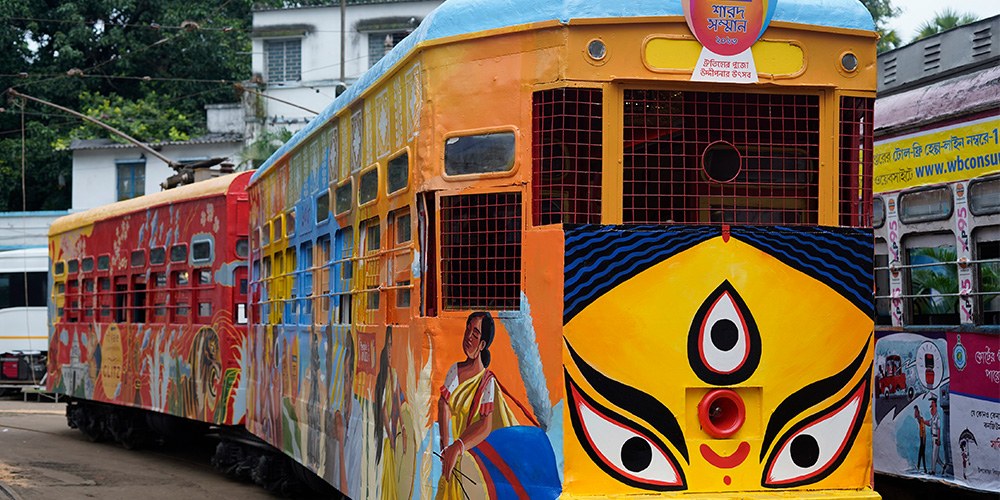
Fast media buys your attention. Slow media borrows your memory, and returns it with interest.
Ding ding. Kindly mind the gap.